

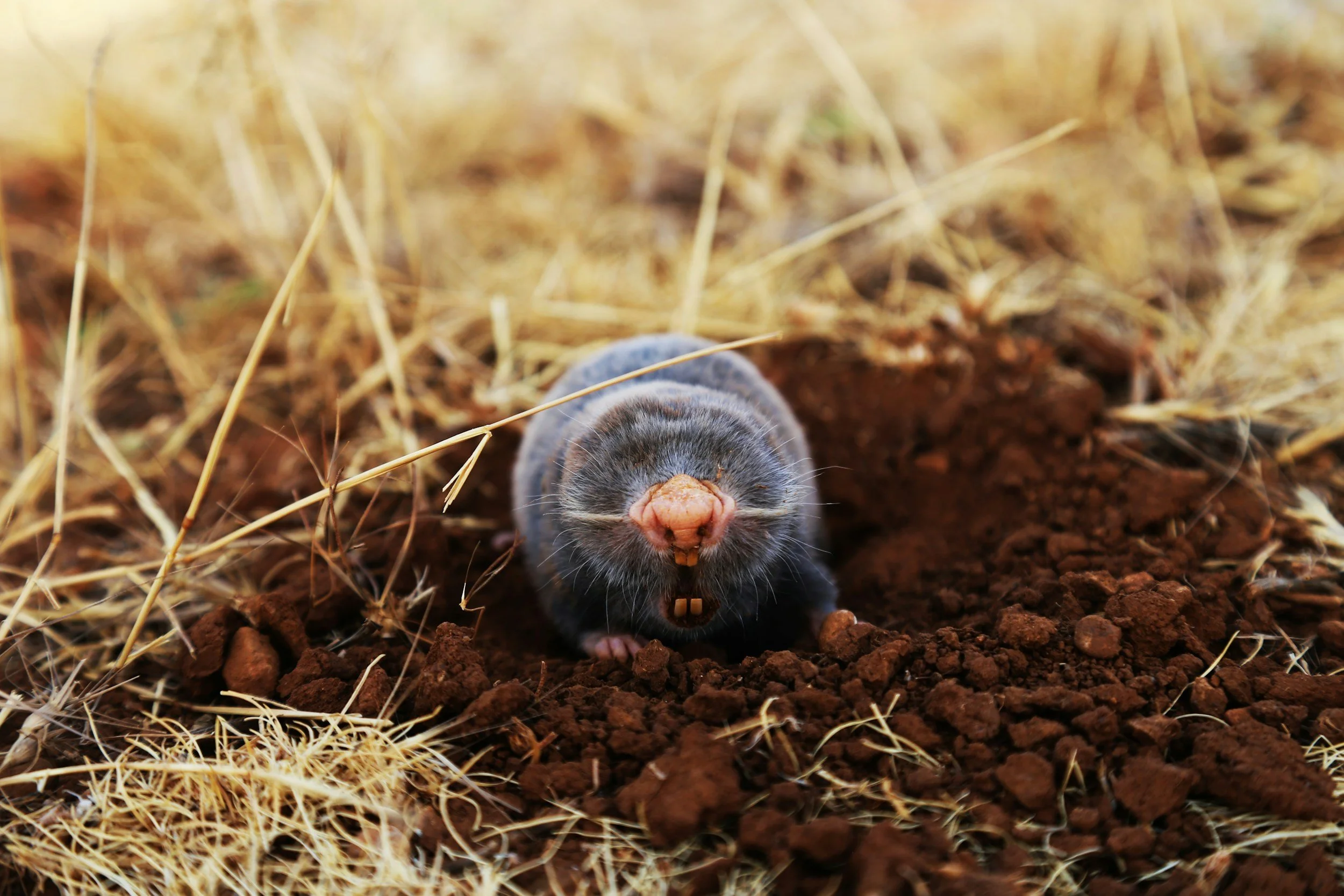
Moles
Mole damage to your property often shows up as raised ridges and conical mounds across lawns and garden beds. Moles create these tunnels in search of insects and grubs. These tunnels can uproot seedlings, damage plant roots, and create uneven ground that is hazardous for walking, mowing, and recreational use. Over time, repeated tunneling compacts soil in some areas while loosening it in others, stressing turf and ornamental plants and making it harder for grass to establish healthy root systems. Moles can also undermine irrigation lines and shallow foundation areas, and their tunnels provide entryways for other pests like voles that feed on bulbs and roots, amplifying overall landscape damage. Prompt identification and targeted control or exclusion measures are important to protect lawn health and prevent progressive deterioration of landscape and hardscape features.
~Click below for an inspection~
Our Approach
We will locate mole activity using visible tracks and tunneling patterns. Then, we will implement targeted control methods tailored to your yard like live trapping, removal, or use granular and landscape pest control when appropriate. We will also address underlying attractants by assessing soil conditions, grub populations, and moisture issues, and recommend corrective steps such as lawn aeration, proper irrigation practices, and grub control to make your property less attractive to moles. Finally, we provide follow-up inspections and exclusion advice to help protect new plantings and maintain a mole-free landscape.