

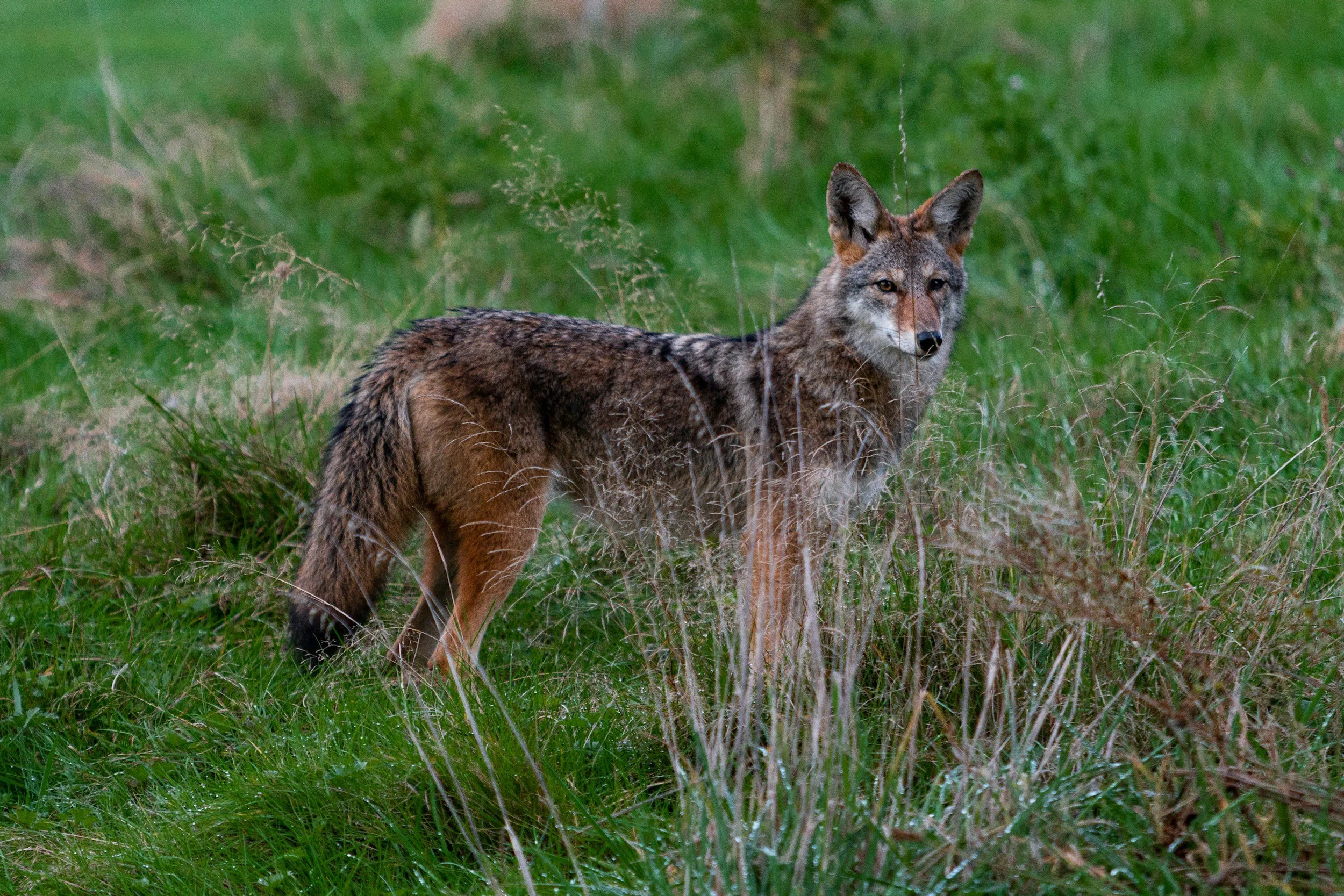
Coyotes
Coyotes can pose several hazards to property, neighborhoods, and farms. They may kill or injure pets and livestock, especially smaller animals. They can dig or damage lawns, gardens, and compost piles while hunting rodents or seeking food. They also create noise and stress with howling or yipping that disturbs residents. Coyotes are attracted to easily accessible food sources—pet food left outdoors, unsecured garbage, birdseed, or fallen fruit. They can become bolder and more likely to approach yards, which can increase the risk of confrontations. In rare cases, habituated coyotes can exhibit aggressive behavior toward people, particularly children, and can carry diseases or parasites transferable to pets and humans. Reducing attractants, securing garbage and pet food, supervising pets, and using exclusion measures for small areas can lower hazards and help keep both property and neighborhood residents safer.
Our Approach
We provide comprehensive coyote protection services tailored to residential and commercial properties across Southeastern North Carolina. We will assess each property, use exclusion techniques, and will conduct ongoing monitoring to minimize risk. We will identify attractants, entry points, and landscape features that encourage coyote activity. Then we have the licenses to implement traps. By addressing both immediate hazards and long-term solutions. We can help you maintain a property free of intrusive and dangerous coyotes.