

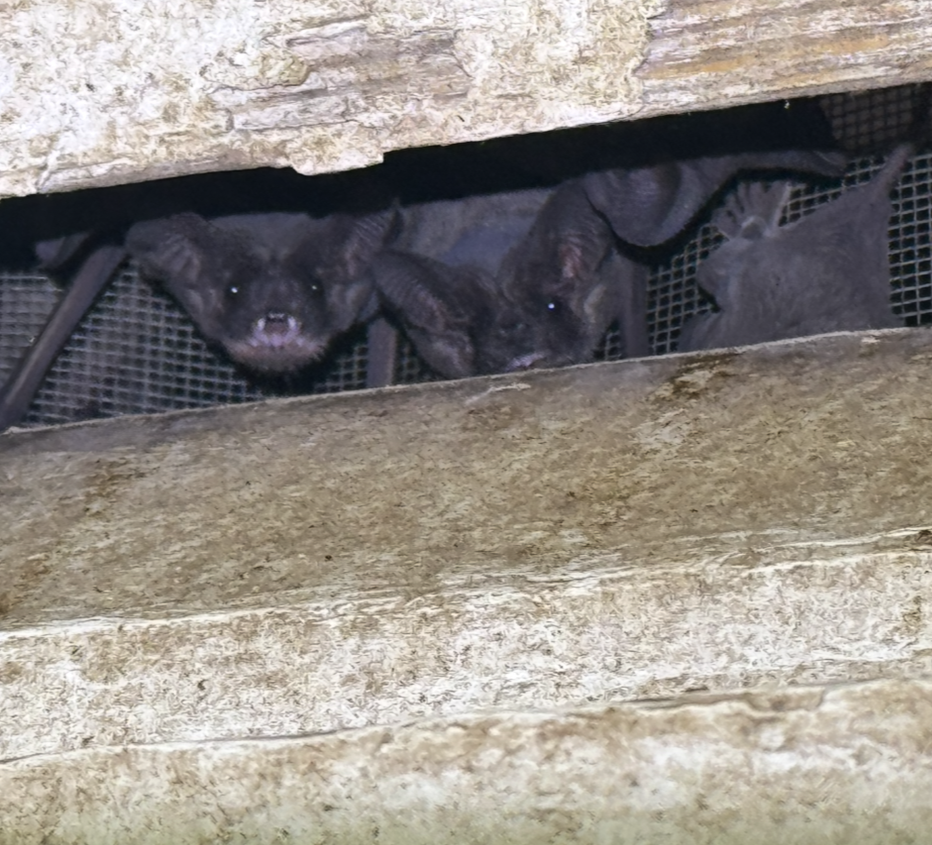
Bats
Bats can cause significant property damage when they roost in attics, chimneys, or wall voids. Their guano and urine stain insulation and structural wood, promote mold growth that degrades building materials and air quality, and accumulated droppings can produce foul odors and lead to illness. Beyond structural concerns, bats are a recognized RABIES reservoir in North America and can transmit the virus through bites or direct contact with saliva, posing a serious health risk. Even without bites, handling or disturbing sick bats increases exposure risk. In addition to rabies, bat guano can harbor fungal spores such as Histoplasma capsulatum, which can cause respiratory illness in people who inhale contaminated dust, so any bat infestation should be addressed promptly and safely by professionals.
~click below for an inspection~
Our Approach
We are certified to remove live bats using humane, state-compliant methods that prioritize the animals’ safety and your property’s protection:
First, we perform a thorough daytime inspection to locate entry points, roost sites, and access pathways.
Then, we schedule exclusion work during times when pups are independent to avoid trapping young inside.
Installing one-way exclusion devices and sealing all identified openings with wildlife-grade materials so bats can exit but cannot return.
We provide attic clean-out and decontamination when needed to remove guano and urine.
We repair or reinforce damaged vents, soffits, and rooflines to prevent future access.
We offer a follow-up monitoring visits to confirm exclusions are secure, and to maintain long-term bat-free conditions all while complying with local wildlife regulations and minimizing harm to protected bat species.